


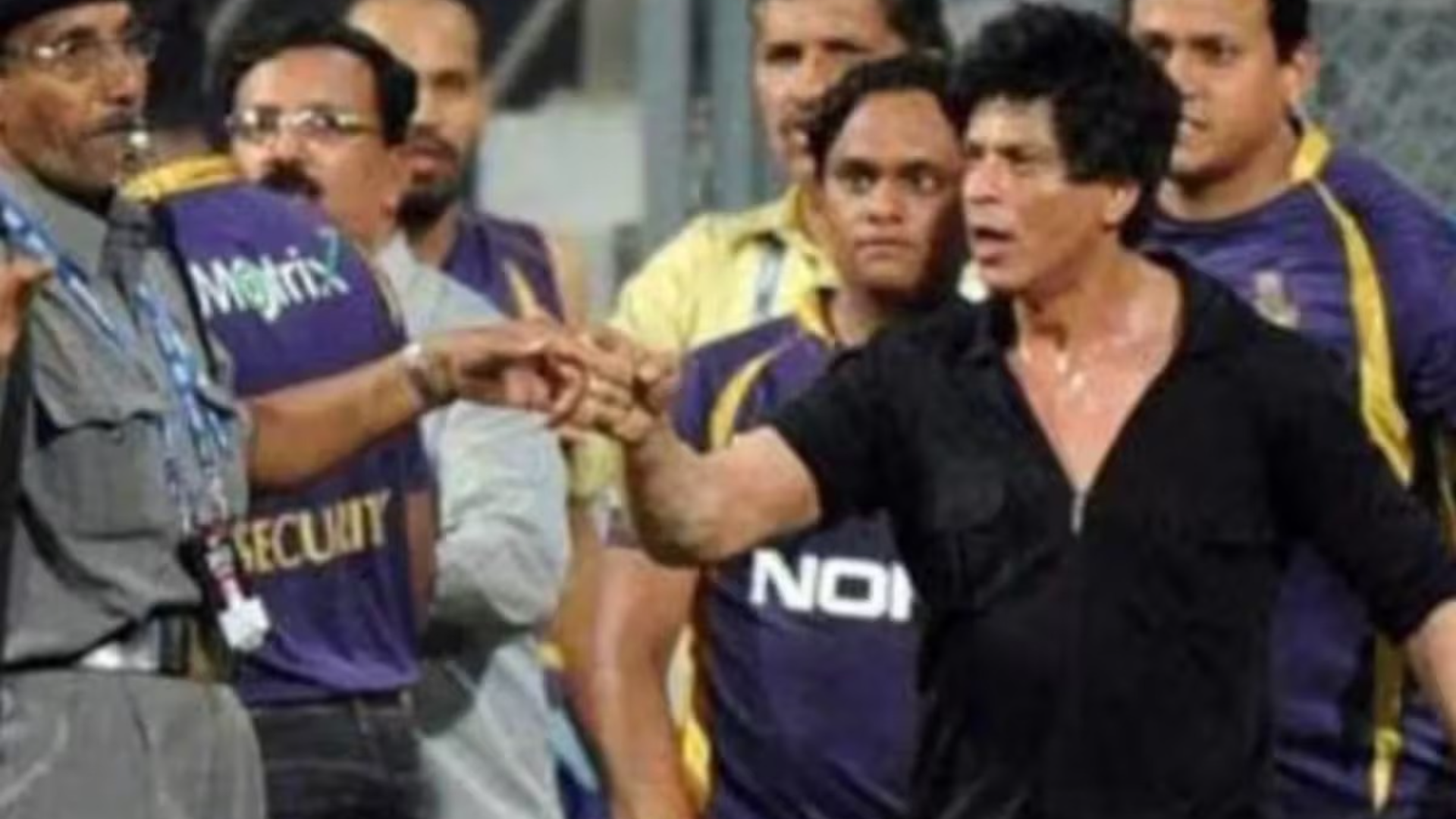
The infamous 2012 confrontation at Mumbai’s Wankhede Stadium remains one of the most talked-about moments in the history of the Indian Premier League. For years, the narrative surrounding Bollywood superstar Shah Rukh Khan’s five-year ban from the stadium was defined by the word “raada”—a local term for a chaotic brawl or ruckus.
However, in later reflections, former Assistant Commissioner of Police Iqbal Shaikh, who was the on-duty officer during the incident, has provided a more nuanced perspective, suggesting that much of the drama stemmed from a massive miscommunication rather than pure aggression.
The incident occurred following a match between the Mumbai Indians and the Kolkata Knight Riders. At the time, reports suggested that Khan had entered the field of play and engaged in a heated verbal spat with security personnel and Mumbai Cricket Association officials. The fallout was swift: the MCA slapped the actor with a half-decade ban, and the term “raada” became the headline of every major news outlet across the country.
The Perspective of the Man on the Ground
Iqbal Shaikh, who was tasked with maintaining order at the stadium that night, has often been the primary source of truth for the events that unfolded. While he admitted that the situation was extremely tense and that the actor was visibly upset, Shaikh has since clarified the context of the outburst.
According to the former ACP, the situation was not a one-sided act of defiance but a reaction to a series of misunderstandings between the stadium’s private security and the actor’s entourage.
Shaikh noted that the actor was primarily concerned about the safety and handling of the children who had accompanied him to the match. When security tried to clear the field after the game, a lack of clear communication led to a physical push-and-pull. In the heat of the moment, words were exchanged, and the situation spiraled. Shaikh’s use of the word “raada” was a description of the chaotic scene that followed, but he has consistently maintained that the intent was not to disrespect the law or the sport.
Miscommunication and Emotional Escalation
From a policing standpoint, Shaikh observed that the incident could have been avoided if the stadium staff and the celebrity’s security team had been on the same page regarding post-match protocols. The “raada” was essentially an emotional escalation triggered by a perceived threat to the children in the group. Shah Rukh Khan himself later stated that he reacted as any father would if he felt his children were being manhandled.
The MCA’s decision to ban the actor was seen by many as a stern message that no individual is above the rules of the ground. However, as the years passed, the realization set in that the incident was perhaps more of a high-profile misunderstanding than a criminal act. The ban was eventually lifted in 2015, two years early, following internal discussions within the MCA and a softening of stances on both sides.
Moving Beyond the Controversy
Today, the Wankhede incident serves as a case study in how public perception can be shaped by a single word or a few seconds of footage. While the former ACP’s description of the “raada” stuck in the public consciousness, his later clarifications offer a more balanced view of a human error fueled by adrenaline and protective instincts.
The resolution of the ban and the actor’s eventual return to the stadium marked the end of a long-standing “cold war” between the superstar and the cricket association. It highlights a shift from the initial outrage toward a more empathetic understanding of the miscommunications that occur in high-pressure, high-security environments.
As the IPL continues to grow, the Wankhede incident remains a reminder of the need for better dialogue between authorities and public figures to prevent such “raadas” from happening again. To
know such
latest updates tuned tellyboosters.com Thank you

