


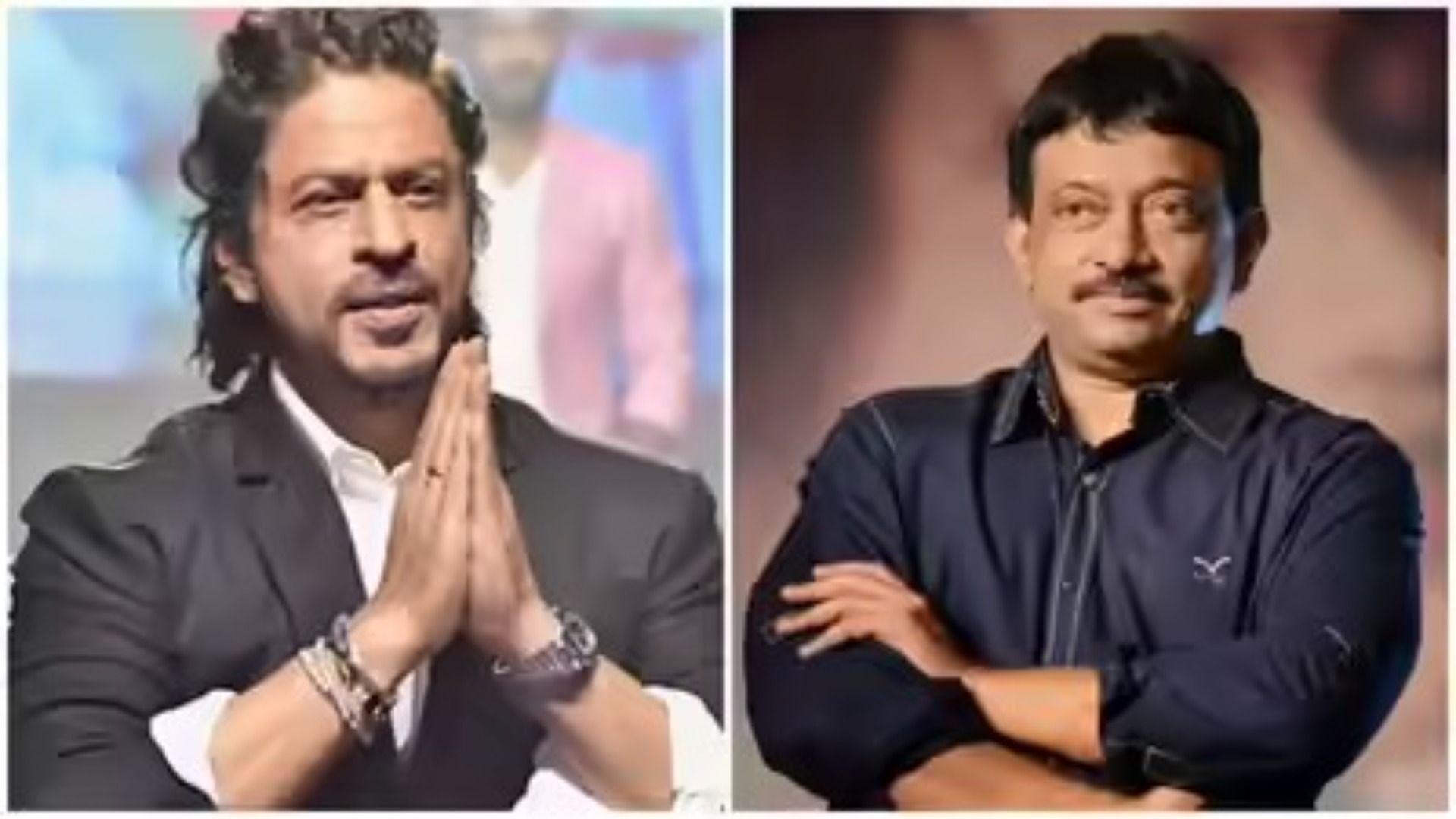
The core of the issue lies in the contrasting energy and mood of their respective work. Ram Gopal Varma is known for his signature style that often focuses on intense, composed, and gritty narratives, frequently exploring the criminal underworld, psychological thrillers, and raw realism, as seen in his classics like Satya and Company.
RGV describes Shah Rukh Khan as a “live wire,” an actor who is always bursting with natural, high energy and a certain trademark charisma that audiences have come to expect. This energetic and often emotionally expressive style is what defines SRK’s massive stardom.
In contrast, RGV’s desired performances are generally subtle, laid-back, and intensely restrained, especially for his lead characters. The director felt that asking SRK to suppress his natural, high-wattage energy to fit a more composed and intense role would be a disservice, or an “injustice,” both to the actor and to his vast fan base who look forward to his signature charm.
This creative incompatibility was highlighted by a near-collaboration for RGV’s 2002 gangster film, Company. RGV revealed that he had initially considered Shah Rukh Khan for the role of Mallik, the cold-blooded gangster boss a role eventually played by Ajay Devgn.
The character of Mallik was meant to be a “very laid-back and lazy-looking guy”—subtle, reserved, and cold-blooded in his thinking. The Mismatch RGV realised that SRK’s inherent, vibrant energy was the exact opposite of the quiet, subtle, and almost immobile presence required for Mallik. To force Shah Rukh Khan into such a restrained body language would, in RGV’s view, have made the character look “very odd on screen” and ultimately compromised the film’s vision.
Another fascinating reason RGV cites for not directing SRK is a belief that the superstar doesn’t actually need a director in the traditional sense.
RGV has praised Shah Rukh Khan’s extraordinary ability as a performer, stating that the actor can “hold the camera and entertain you without anything” and can instantly deliver a scene once he understands the basic concept.
This led RGV to a candid admission that he felt he “wasn’t a capable enough director to handle Shah Rukh and his image” because their worlds and cinematic expectations simply didn’t align. He felt that for a very “hands-on” director like himself, a project with SRK would leave him with “nothing for me to do,” as the actor’s innate star power and performance would already be complete.
In essence, the lack of collaboration between these two powerhouse figures comes down to a deep-seated respect for each other’s distinct crafts, coupled with a clear, conscious decision that their opposing creative languages—the subtle intensity of RGV versus the energetic charisma of SRK—were simply incompatible for a successful artistic partnership. To know such latest updates, stay tuned to tellyboosters.com Thank you!

