


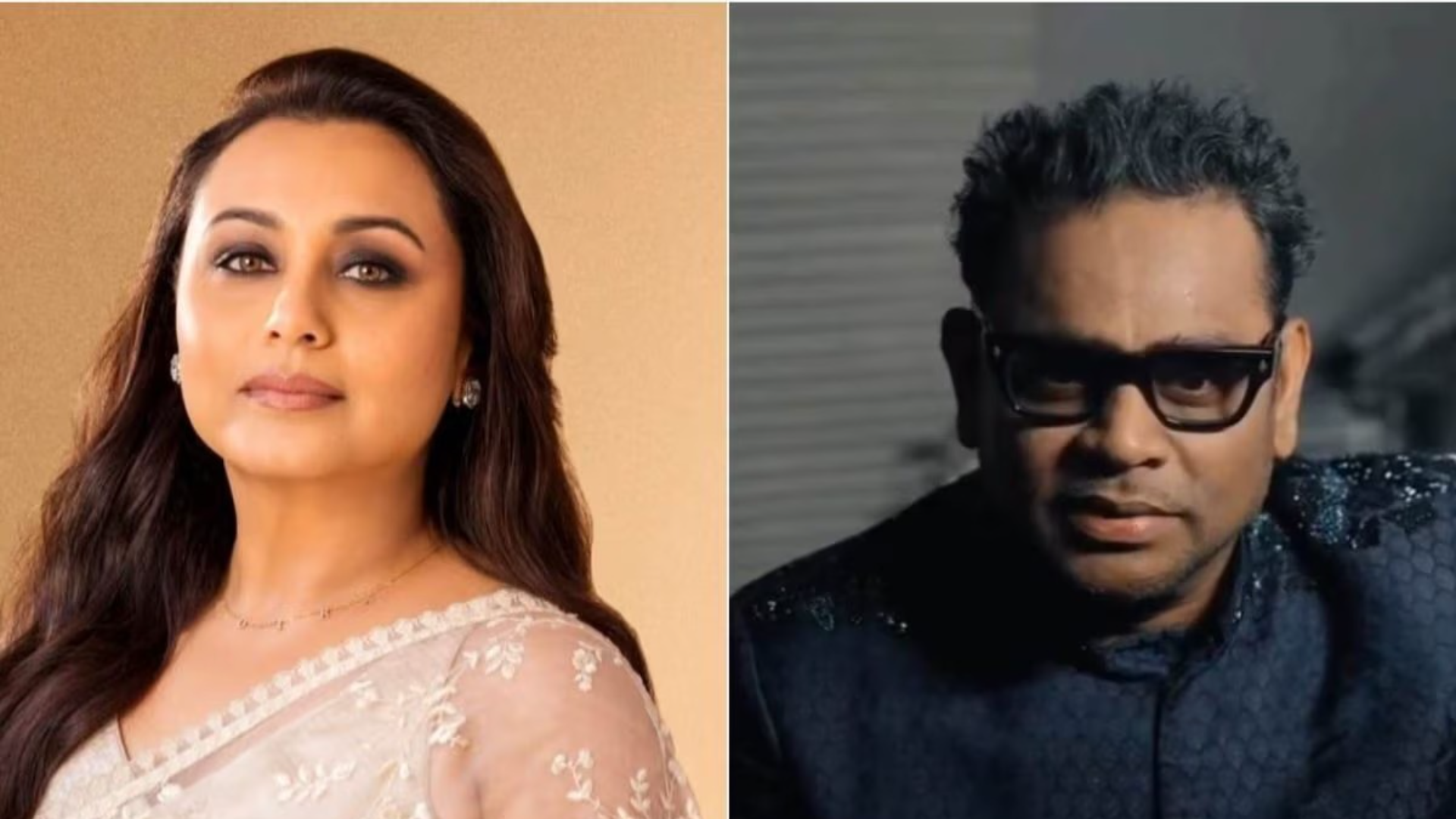
In an industry often under the microscope for its internal dynamics, a new debate has emerged involving two of Indian cinema’s most respected figures. Rani Mukerji, currently on a promotional tour for her upcoming film Mardaani 3, has firmly disagreed with AR Rahman’s recent suggestions that a “communal” shift has affected decision-making in the Hindi film industry
The controversy began earlier this month during AR Rahman’s interview with the BBC Asian Network. The legendary composer, while discussing why his frequency of work in Bollywood has declined over the past eight years, suggested that a power shift has occurred.
Rahman noted that “people who are not creative” now hold the reins, adding that the lack of opportunities “might have been a communal thing also,” though he clarified that such bias was never “in his face” but rather communicated through “Chinese whispers.”
Rani Mukerji’s Stance: “Merit is the Only Currency”
Responding to these claims during a recent interaction with DD News, Rani Mukerji offered a contrasting perspective based on her three decades in the limelight. The actress, known for her candidness, described the film industry as one of the few truly inclusive spaces in the country.
“Bollywood is the most secular place, and I truly believe that. There is no discrimination based on caste or religion. In my 30 years in the industry, I have never experienced anything like this,” Mukerji stated.
She further emphasized that success in the industry is ultimately dictated by the audience and the quality of one’s work. “I am saying this from the bottom of my heart: here, merit matters. Your work speaks for you, and ultimately, the person the audience connects with is the one who survives.”
While Mukerji’s comments have been hailed by many as a powerful defense of the industry’s culture, Rahman’s original remarks had already opened a Pandora’s box. Critics and supporters alike have been debating whether the “shifting power dynamics” Rahman mentioned refer to a genuine cultural shift or are simply a byproduct of the industry’s evolving commercial structure.
Other industry veterans have also weighed in.
While some, like Ranvir Shorey, suggested that professional hurdles are often “political or feudal” rather than communal, others have echoed Rani’s sentiment that Bollywood remains a melting pot of talent where results outweigh backgrounds.
Despite the back-and-forth, both artists seem keen on moving past the friction. Rahman recently issued a video clarification, stating his intentions were misunderstood and that his “purpose has always been to uplift and serve through music.”
Meanwhile, Rani Mukerji remains focused on her cinematic contributions. When asked about the existence of “lobbies” within the industry, she maintained a pragmatic distance. “I stay far away from all of that. I only focus on my films, and at this stage, my priority is my child and my family.”
As Mardaani 3 nears its release, the conversation continues to linger: Is Bollywood truly the secular bastion Rani describes, or are the “whispers” Rahman heard a sign of a deeper change? For now, the industry remains divided on the answer, but united in its respect for the two icons leading the debate. To know such latest updates tuned to tellyboosters.com Thank you!

