


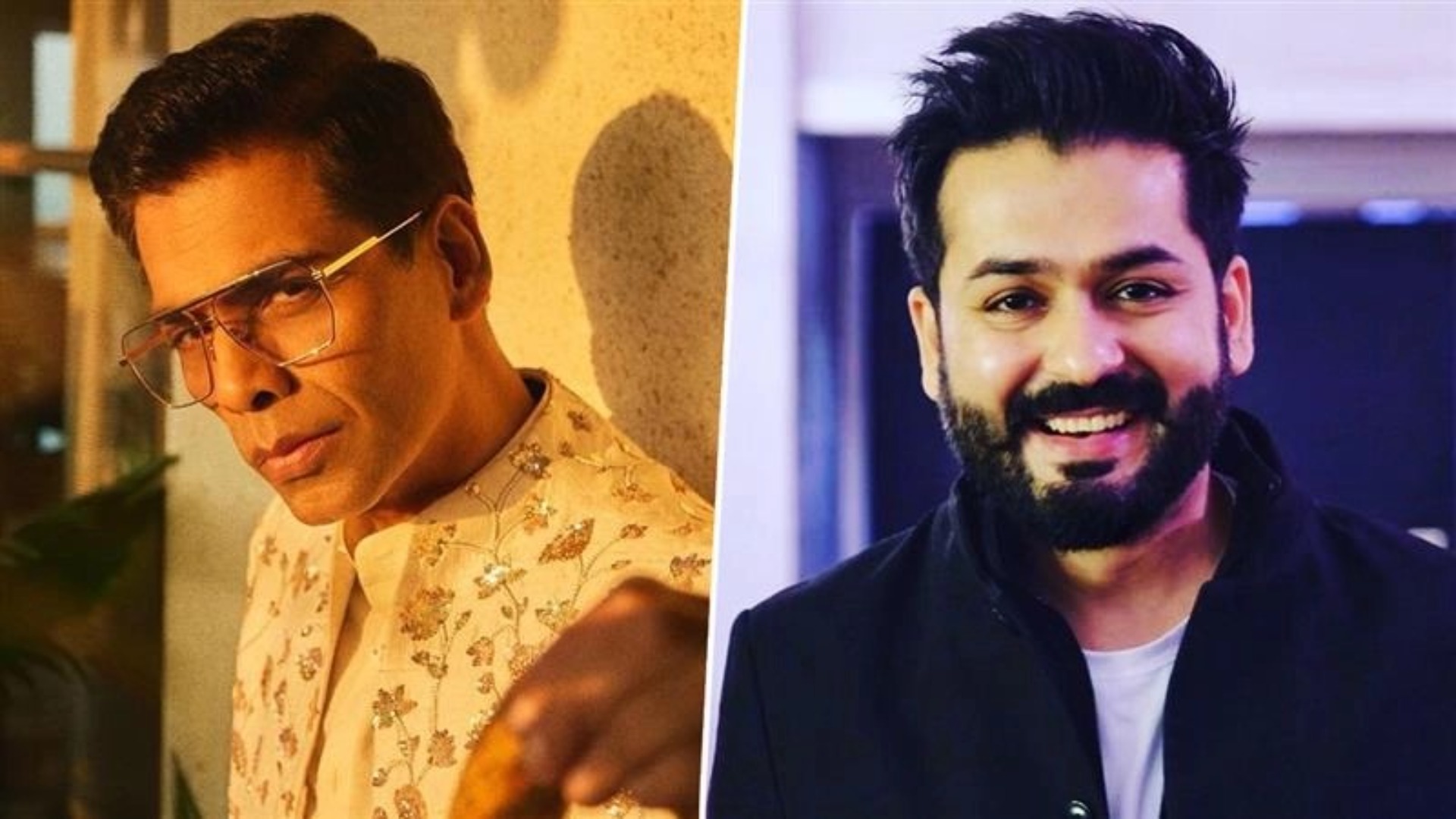
In the glitzy, high-stakes world of Bollywood, Karan Johar is often seen as the ultimate insider. He is the man who redefined the modern Indian romance, a filmmaker who breathes life into larger-than-life sets, and a producer who seems to have the “Midas touch.” However, even the most successful creators have moments where the ground beneath them feels shaky.
Recently, Johar made a candid admission that sent ripples through the industry: watching the work of Dhurandhar the visionary director behind some of the most path-breaking recent cinema made him seriously question his own abilities as a filmmaker.
For a director like KJo, who has spent decades perfecting a specific brand of glossy, emotional storytelling, encountering a completely different cinematic language can be a shock to the system. “Dhurandhar” represents a shift toward raw, unapologetic, and technically masterful filmmaking.
When Karan spoke about this, he wasn’t just being humble; he was expressing a very real “creative crisis.” He noted that The way the film was framed and paced made him look at his own techniques as perhaps “too safe” or “traditional.”
It is rare to see a veteran admit that a contemporary made them feel small. In most professional circles, pride usually prevents people from saying, “I’m not sure if I’m good enough anymore.” By acknowledging this, Karan Johar actually showed a different kind of strength.
He highlighted a universal truth about art: complacency is the enemy. If you aren’t being challenged by the work around you, you aren’t growing. The fact that he felt “questioned” suggests that he is still hungry to learn. Instead of dismissing a different style of filmmaking, he chose to let it affect him, process it, and use it as a mirror for his own career.
The big question now is how this realization will change the movies we see from Dharma Productions in the future. We’ve already seen Karan experiment more—moving away from the “candy-floss” templates of the early 2000s and leaning into more complex, sometimes darker themes.
If a filmmaker of his stature can sit in a dark theater, watch a peer’s work, and think, “I need to do better,” it bodes well for the industry. It means the “old guard” is paying attention to the “new wave,” and that bridge between commercial spectacle and artistic depth is getting shorter. To know such latest updates, stay tuned to tellyboosters.com Thank you!

