


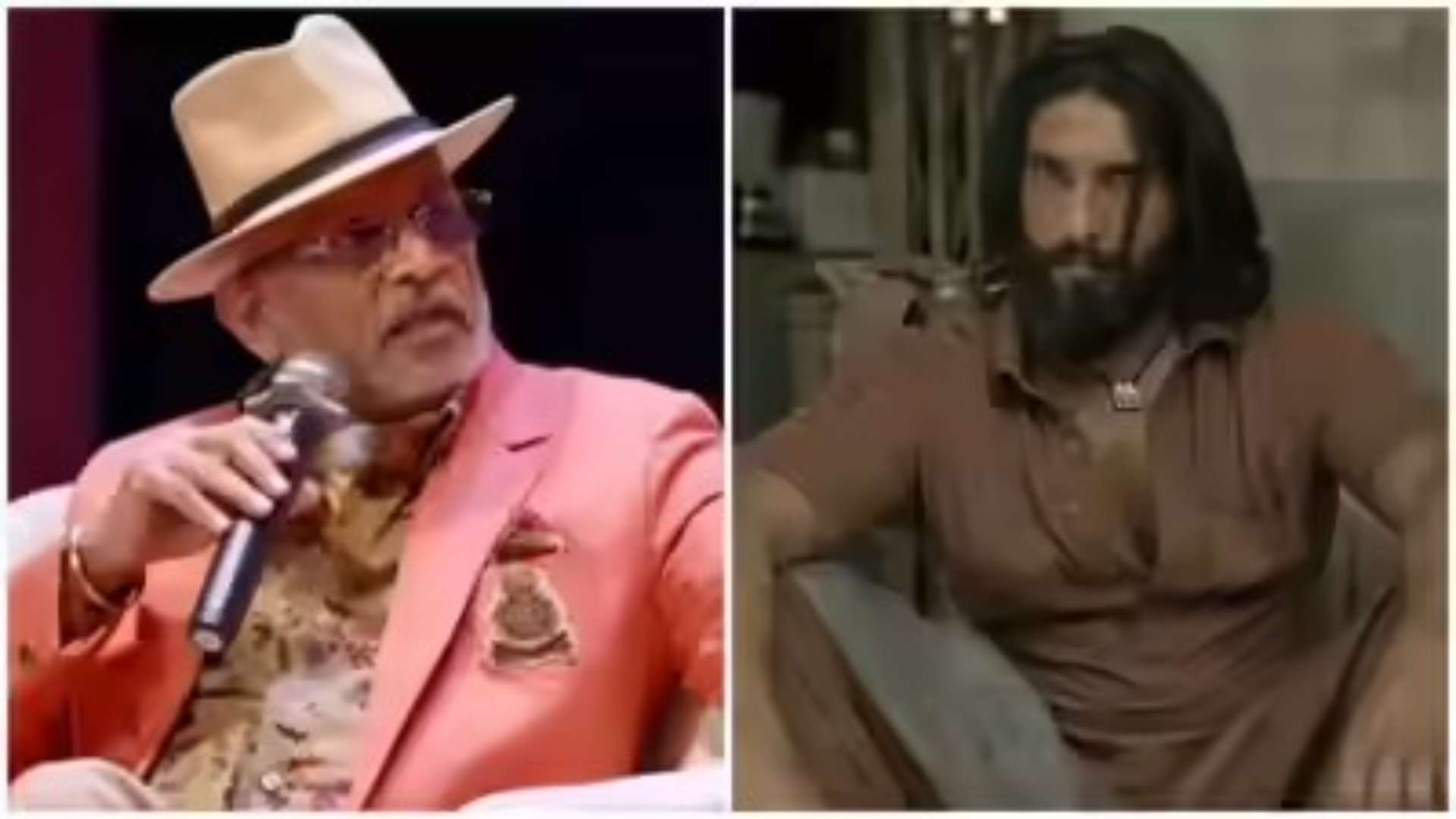
The Hindi film industry has recently been swept up in a heated debate following the release of director Aditya Dhar’s latest project, Dhurandhar: The Revenge. While the film has shattered box office records, earning an estimated ₹800–900 crore, it has also faced sharp criticism from certain sections of the audience and critics who label it as “propaganda” and accuse it of distorting historical timelines. Now, veteran actor Annu Kapoor has stepped into the fray, offering a blunt and historical perspective on the controversy.
In a recent candid conversation with Siddharth Kannan, Kapoor dismissed the outrage surrounding the film’s narrative, suggesting that the intersection of cinema and political messaging is far from a new phenomenon.
Propaganda is Not New to Cinema
Responding to the allegations that Dhurandhar serves a specific ideological agenda, Kapoor maintained a pragmatic stance. He argued that throughout the history of world cinema, filmmakers have used the medium to project specific viewpoints.
“From what I know, the film has earned around ₹800–900 crore. So, what’s the problem? Others are free to make films representing their own views as well,” Kapoor stated.
He further noted that “propaganda” has existed in the industry for decades, citing the example of the 1970s film Kissa Kursi Ka, which was famously banned during the Emergency.
According to Kapoor, the success of a film in a democracy is the ultimate barometer of public sentiment. He remarked that if the majority of the audience is supporting a film, it reflects the democratic nature of the country. “Winning and losing are part of life; why cry about it?” he added.
The Myth of the ‘Insider’ vs. ‘Outsider’
The veteran actor also addressed the evergreen debate regarding the power dynamics between industry “insiders” and “outsiders.” While modern social media often portrays the rise of outsiders as a recent revolution against a “nepotistic” system, Kapoor argued that the biggest legends of Indian cinema were, in fact, outsiders who “ruled” the industry long before the term became a hashtag.
Kapoor listed a series of iconic names to prove his point Dilip Kumar, Dev Anand, Dharmendra, Rajesh Khanna, Amitabh Bachchan and Shah Rukh Khan.
“All of them were outsiders. They didn’t have godfathers. They made it on their own,” Kapoor emphasized. He suggested that the only difference today is the strength of the media and social platforms, which amplify these conversations more than in previous eras.
On Nepotism and Audience Choice
Touching upon the sensitive topic of nepotism, Kapoor offered a grounded perspective. He acknowledged that while it is natural for a father to support his child, that support does not guarantee a career in the spotlight. He pointed out that if the “system” were truly rigged, every star kid would be a superstar, which is clearly not the case.
According to Kapoor, the audience remains the final judge. A film like Dhurandhar which features a massive ensemble including Ranveer Singh and Sanjay Dutt—succeeds not because of the director’s lineage or the cast’s connections, but because the viewers choose to buy the tickets.
As Dhurandhar continues its dominant run in theaters, Kapoor’s comments serve as a reminder that the debates currently rocking Bollywood be it over political narratives or industry gatekeeping are threads that have been woven into the fabric of the Indian film industry since its inception. To
know such
latest updates tuned tellyboosters.com Thank you

