


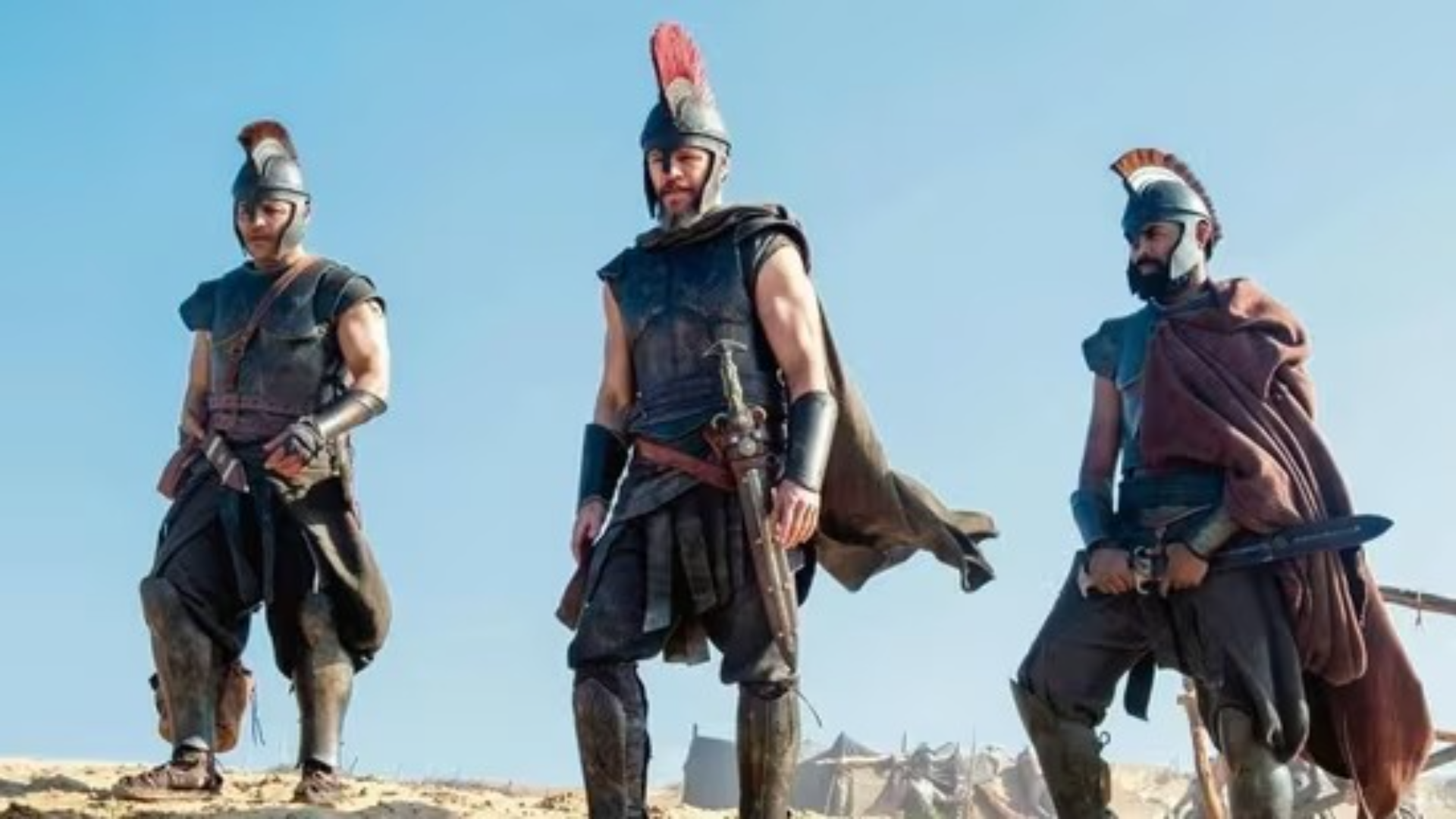
The grand theatrical release of the massive historical blockbuster The Odyssey has completely taken the global cinematic box office by storm, sparking an intense curiosity among audiences regarding the true historical roots of the narrative. Directed by visionary filmmaker Christopher Nolan and featuring a stellar multi-starrer ensemble cast including Matt Damon, Tom Holland, and Anne Hathaway, the visually spectacular IMAX epic vividly reimagines the harrowing post-war journey of the mythological Greek hero Odysseus. As millions of film enthusiasts marvel at the sweeping battle sequences and larger-than-life mythical monsters brought to life on screen, a major historical question continues to dominate online discussions: is the original narrative a true historical record, or is it purely a work of profound ancient fiction? To separate factual history from poetic imagination, historians and researchers point out that while the ancient poem is technically classified as a work of mythic literature rather than a precise documentary text, its core plot remains deeply anchored in a fascinating mix of real-world Bronze Age geography, verified archaeological discoveries, and the brutal psychological trauma experienced by real ancient soldiers returning home from long military campaigns.
The epic foundation of the cinematic masterpiece traces its roots back to the legendary 8th-century BCE Greek poet Homer, who composed the original literary work nearly three thousand years ago as a direct thematic sequel to the Iliad. While the narrative heavily features extraordinary elements like the one-eyed Cyclops, alluring Sirens, and vengeful Greek deities that are obviously products of creative mythology, modern archaeological science has proved that the ancient setting of the poem is surprisingly authentic. The absolute turning point in historical validation occurred during the late 19th century when pioneering German archaeologist Heinrich Schliemann successfully excavated the actual physical ruins of the ancient city of Troy in modern-day Turkey, proving that the legendary Trojan War was indeed a real historical conflict rather than a complete myth. Furthermore, contemporary marine researchers and geographers have mapped out Odysseus’s chaotic wanderings across the Mediterranean Sea, discovering that many of the specified islands, dangerous whirlpools, and coastal straits align precisely with actual dangerous shipping routes navigated by early Greek explorers, which strongly implies that Homer masterfully wove real, terrifying sailors’ tales into his grand fantasy narrative.
What truly bridges the gap between ancient literature and Christopher Nolan’s modern cinematic genius is the profound human realism that underpins the entire fantasy adventure. Rather than focusing purely on magical elements, the acclaimed director heavily emphasizes the deep psychological scars of war, effectively transforming the journey into an intense exploration of post-traumatic stress disorder and the immense difficulty of reintegrating into civilian society after a decade of bloodshed. Historians agree that this emotional core is entirely authentic to the ancient Greek experience, as the epic poem was originally sung to heal the collective trauma of a war-weary society by demonstrating that returning home spiritually is often a far greater battle than the actual military conflict itself. By grounding the spectacular mythological adaptation in these timeless, universal human struggles, the grand cinematic feature beautifully demonstrates that even if the monsters themselves were fabrications, the profound emotional experiences, geopolitical trade rivalries, and structural ruins that inspired the legendary book were absolutely real.
To know such latest updates tuned tellyboosters.com Thank you

